Driveway & Paving Pressure Cleaning
Your driveway is the first thing visitors see — and Cape Town weather is hard on it.
Driveway & Paving Cleaning done right
Your driveway is the first thing visitors see — and Cape Town weather is hard on it. Tyre marks, moss and winter grime build up fast on concrete, brick and natural stone. Our high-pressure cleaning restores paving to its original colour without damaging the surface.
- Concrete, brick, cobble and natural stone paving
- Rust and tyre-mark stain treatment
- Moss and algae removal that keeps surfaces safer for longer
- Optional sealing to protect paving and keep it cleaner
Like everything we do, this service is backed by eco-friendly, biodegradable products, commercial-grade equipment and a team that treats your property like their own.
We handle driveway & paving cleaning right across the Cape Town metro — Southern Suburbs, Atlantic Seaboard & City Bowl, Northern Suburbs, West Coast & Blaauwberg, South Peninsula and the Helderberg & Winelands edge — from Observatory, Green Point, Parow and Century City and everywhere between. Check the areas we serve →
How often a Cape Town driveway actually needs cleaning
Surface decides the interval more than anything else. Poured concrete and asphalt are usually a once-a-year job; brick, cobble and natural stone hold moisture in the joints and tend to need it twice. Push that up if the driveway sits in shade, runs under trees, or carries several cars a day. The two windows worth booking are spring, to strip off the moss and algae the wet winter left behind, and autumn, to clear the organic build-up before the rains give it something to feed on.
Getting oil, rust and tyre marks out — the part water will not do
General grime lifts with detergent and pressure. The stains people actually care about do not. Oil and grease need a degreaser worked in and left to bite for ten to fifteen minutes before anything is rinsed; fresh spills get covered with sand or cat litter first to pull the worst of it out. Rust off a gate hinge or garden furniture usually needs a dedicated rust remover and a second pass. Algae and that green-black film on the shaded side need a treatment left to dwell so the growth dies and rinses away instead of smearing. All of it is done as spot treatment before the general wash, or the driveway dries blotchy.
Why concrete needs a lighter touch than most people expect
Concrete looks bombproof and is not. It is porous, which is why oil and dirt sink in and why algae takes hold so readily on the damp side of a house through a Cape winter. It also means pressure held in one spot blasts out the cement paste and leaves a rough, pale patch that never matches the rest of the slab. Those are the tiger stripes you see on driveways someone had a go at themselves. The job is to lift what is sitting in and on the surface without carving into the concrete underneath.
Pressure, nozzle and distance — where DIY jobs go wrong
The nozzle matters more than the machine's top rating. Around 3000 psi is plenty for residential concrete, brick and interlocking pavers; more is not better. A 25-degree fan tip does the actual cleaning, and on a large flat slab a rotary surface cleaner gives an even finish with no wand marks. The pencil-thin zero-degree tip cuts lines into flat concrete that cannot be undone — it is for stubborn spots only, never for soft plaster or old brick. Keep the tip 20 to 30 cm off the surface, move steadily in overlapping sweeps in one direction, and never park it in one place.
Block paving and natural stone are a different job again
Interlocking pavers and cobbles are held in place by the sand in their joints, and a jet held too close strips it straight out — the paving then rocks underfoot and starts to sink. Natural stone and older, softer brick chip. Both get lower pressure, a wider fan and a shallower angle so the water lifts the dirt rather than driving into the joints, and re-sanding afterwards where it is needed. If your patio is pavers or slasto rather than a poured slab, our pool deck and paver patio cleaning covers that surface specifically.
Doing it yourself, honestly
Renting a machine is genuinely worth it for a small, sound concrete driveway you keep on top of — it is cheaper and the result is fine. It stops being worth it when the surface is old, mixed, stained or delicate, because the failure modes are permanent: etched concrete, sand blown out of paving joints, coatings stripped, cracks widened. That is the real trade-off, not the day of your time. Where we earn our money is matching pressure and product to each surface, and knowing which sections need a gentler approach before we start rather than after.
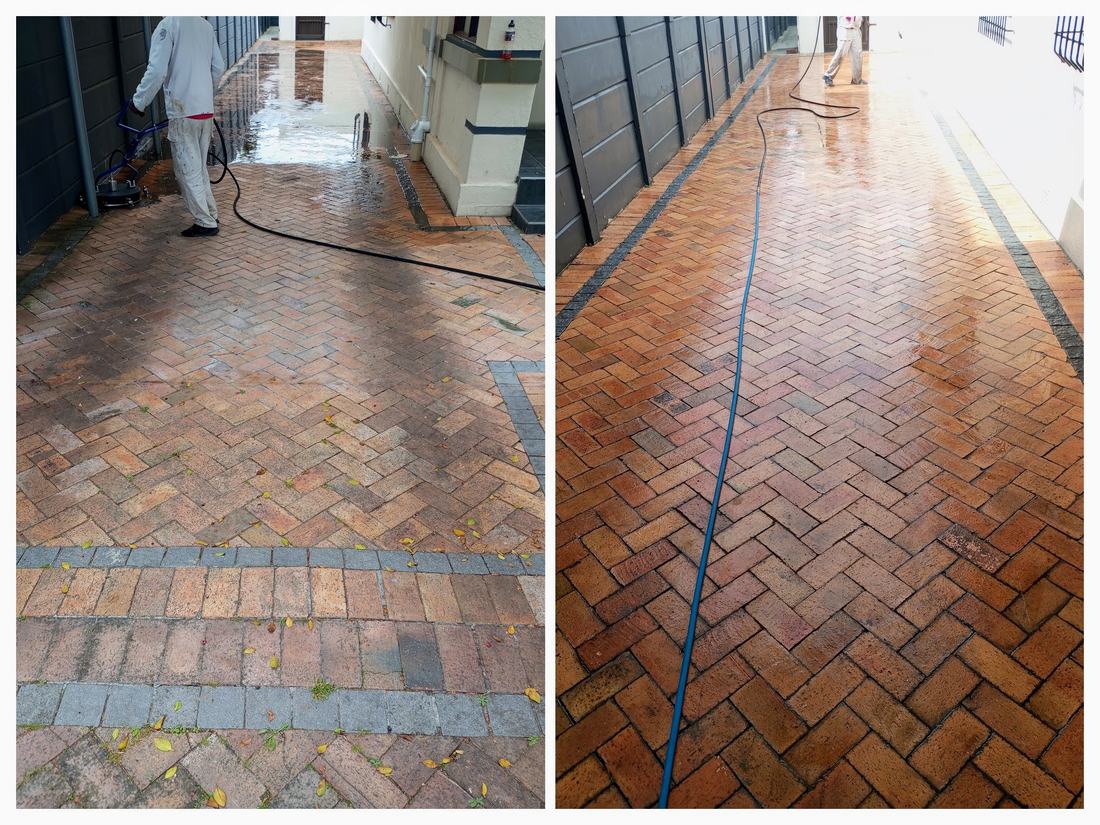
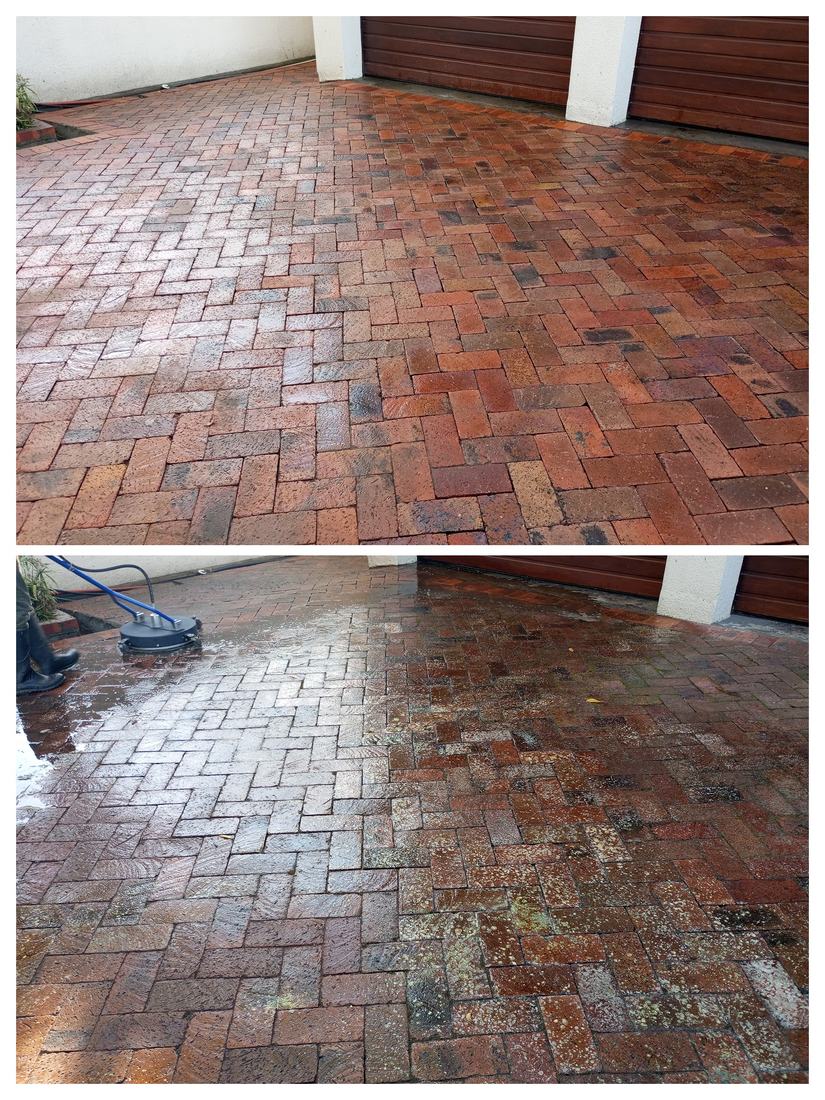
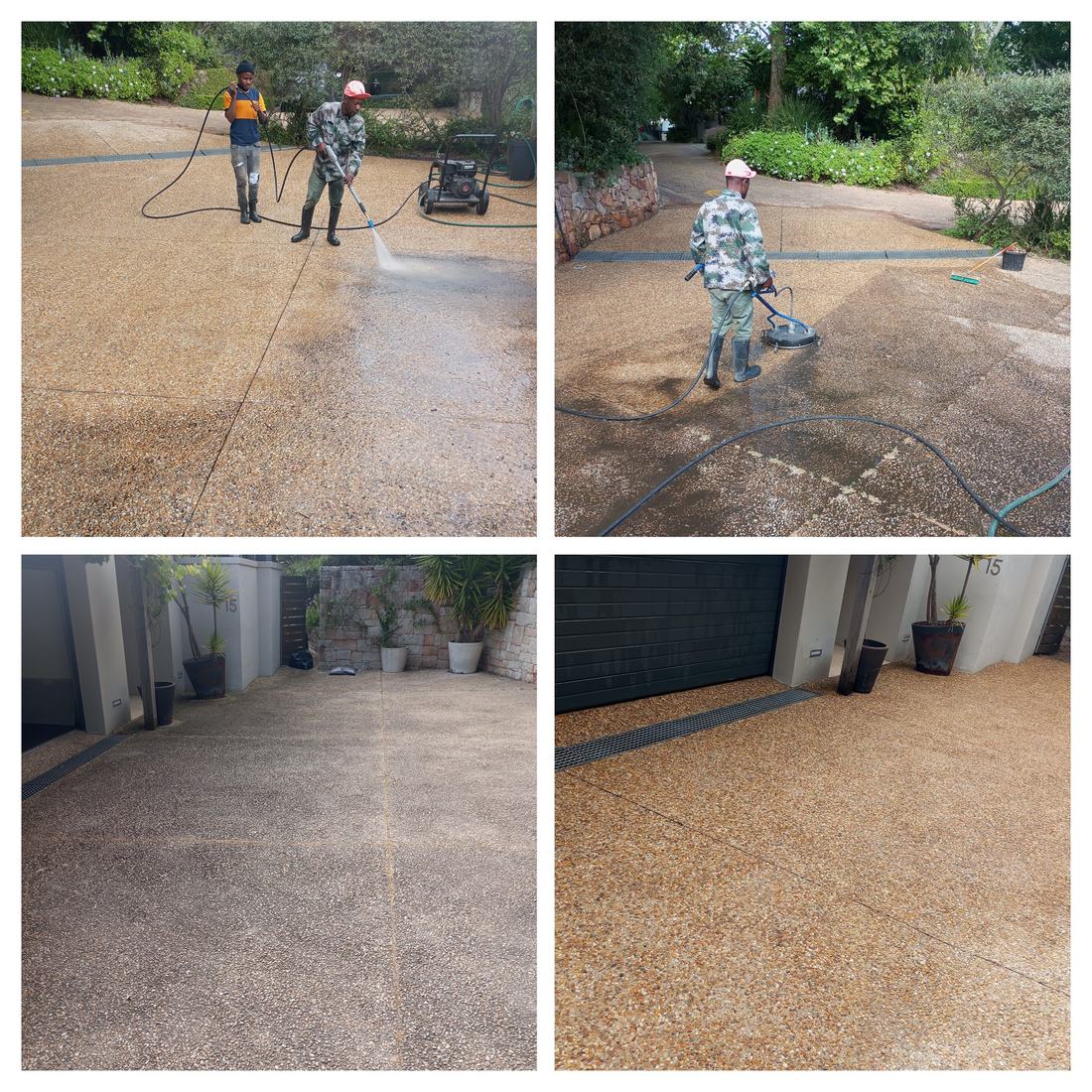
Driveway & Paving Cleaning — before and after
Real jobs on real Cape Town properties. No stock photos.
Frequently asked questions
Will pressure cleaning damage my paving?
No — when done professionally. We match pressure and technique to your surface: robust concrete can take high pressure, while natural stone and older brickwork get a gentler, controlled approach.
How often should you pressure wash a driveway?
Concrete and asphalt usually once a year; brick, cobble and natural stone closer to twice, because the joints hold moisture and grow moss. Shade, overhanging trees and heavy daily traffic all push the interval shorter. In Cape Town the natural times to book are spring, after the winter growth, and autumn, before the rains.
Can you get out oil stains and tyre marks?
Usually, yes. Oil and grease are pre-treated with a degreaser and given time to work before we wash; tyre marks and rust often need a dedicated treatment and a second pass. Very old oil that has soaked deep into porous concrete may lighten considerably rather than disappear entirely — we will tell you which you are looking at when we quote.
How long does it take?
Most residential driveways take between one and three hours depending on size and how heavily soiled the surface is.
Related services
Pool Deck & Patio Cleaning
Slippery algae gone, pavers back to their original colour — braai-area ready.
Pool deck & patio cleaning details →Pavement & Walkway Cleaning
Gum, stains and slippery moss cleared from entrances and walkways.
Pavement cleaning for homes & business →Book your driveway & paving cleaning today
Free quotes across Cape Town — call, WhatsApp or send the form.